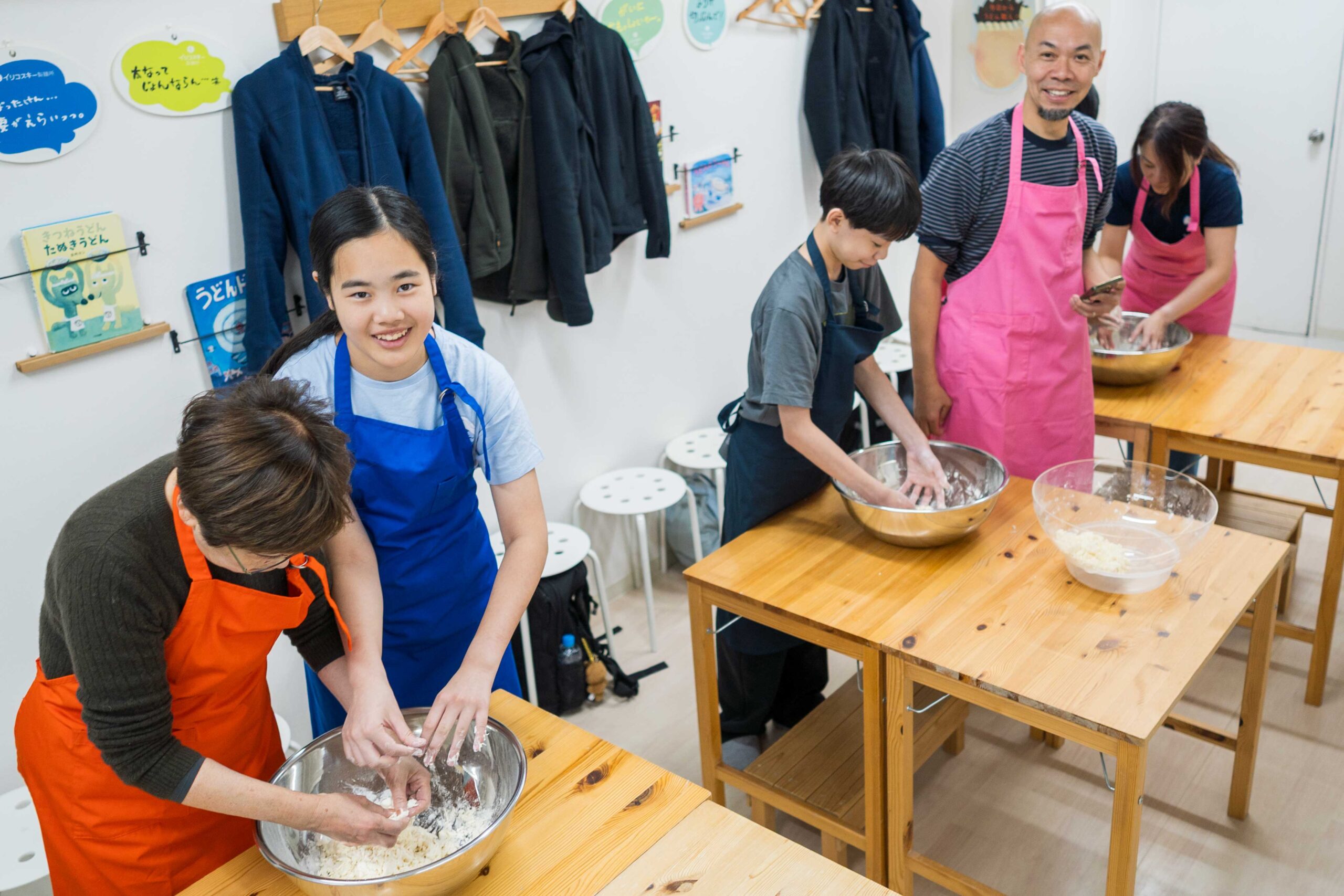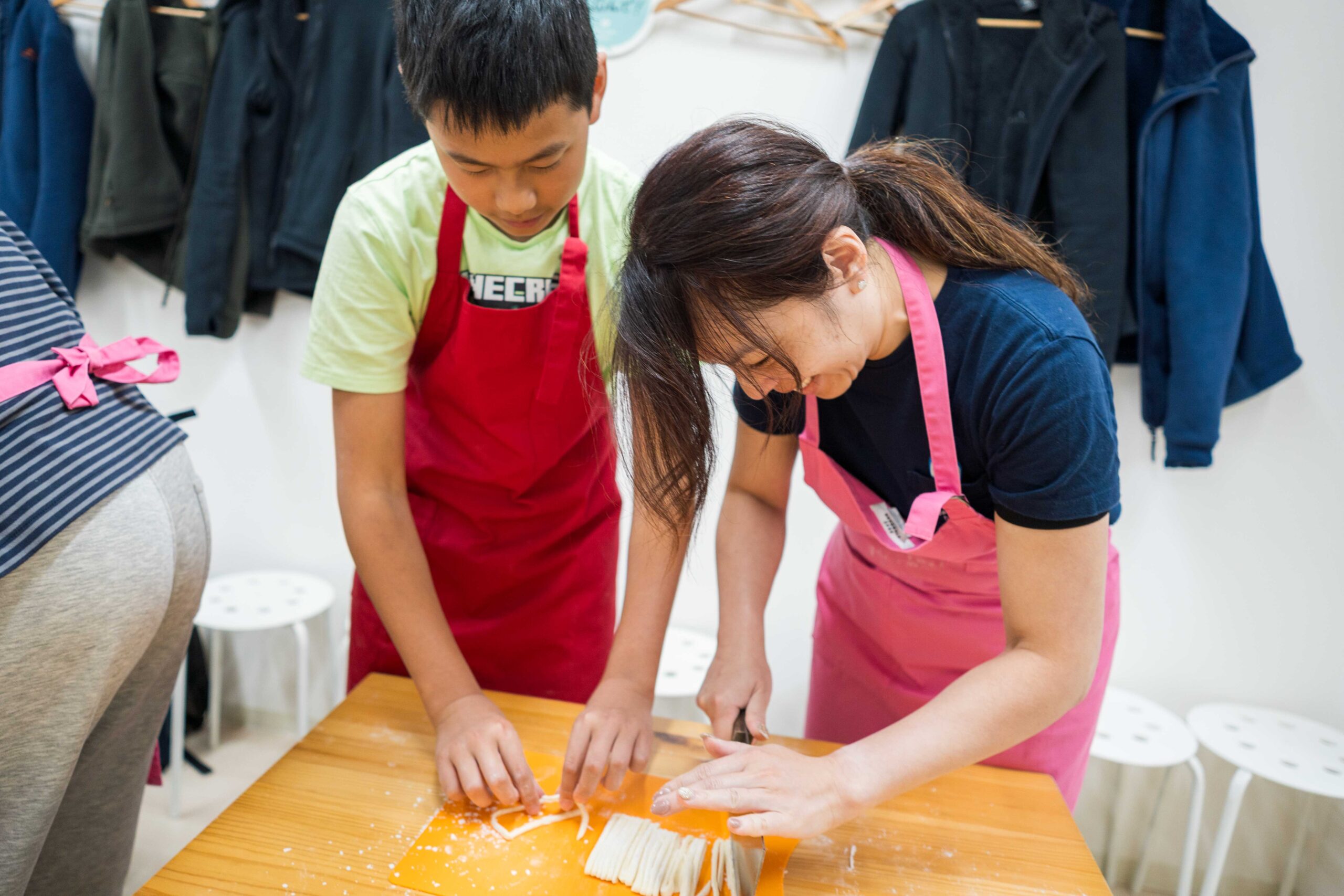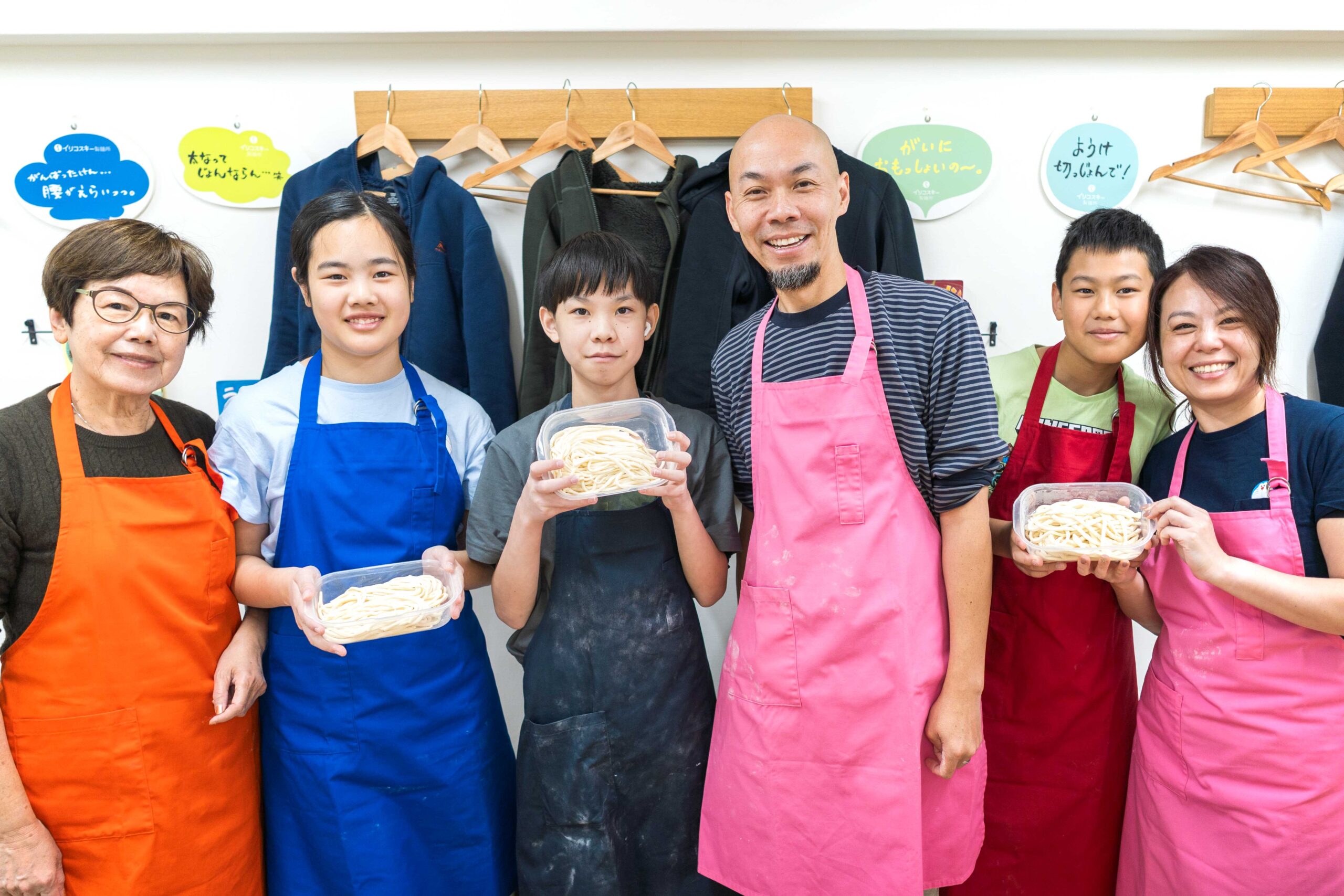
今日は、嬉しい再会から始まりました。 以前ご夫婦でお越しいただいたオーストラリアからのお客様が、今回はお子さまとお母さまもご一緒に、3世代揃って遊びに来てくださったのです。「また行きたい」と思って戻ってきてくださるのは、私たちにとって最高の喜びです。 お母さまと男の子が協力して生地を切る場面や、みんなで粉と水を混ぜて生地を作る工程など、ご家族の温かい時間が流れていました。
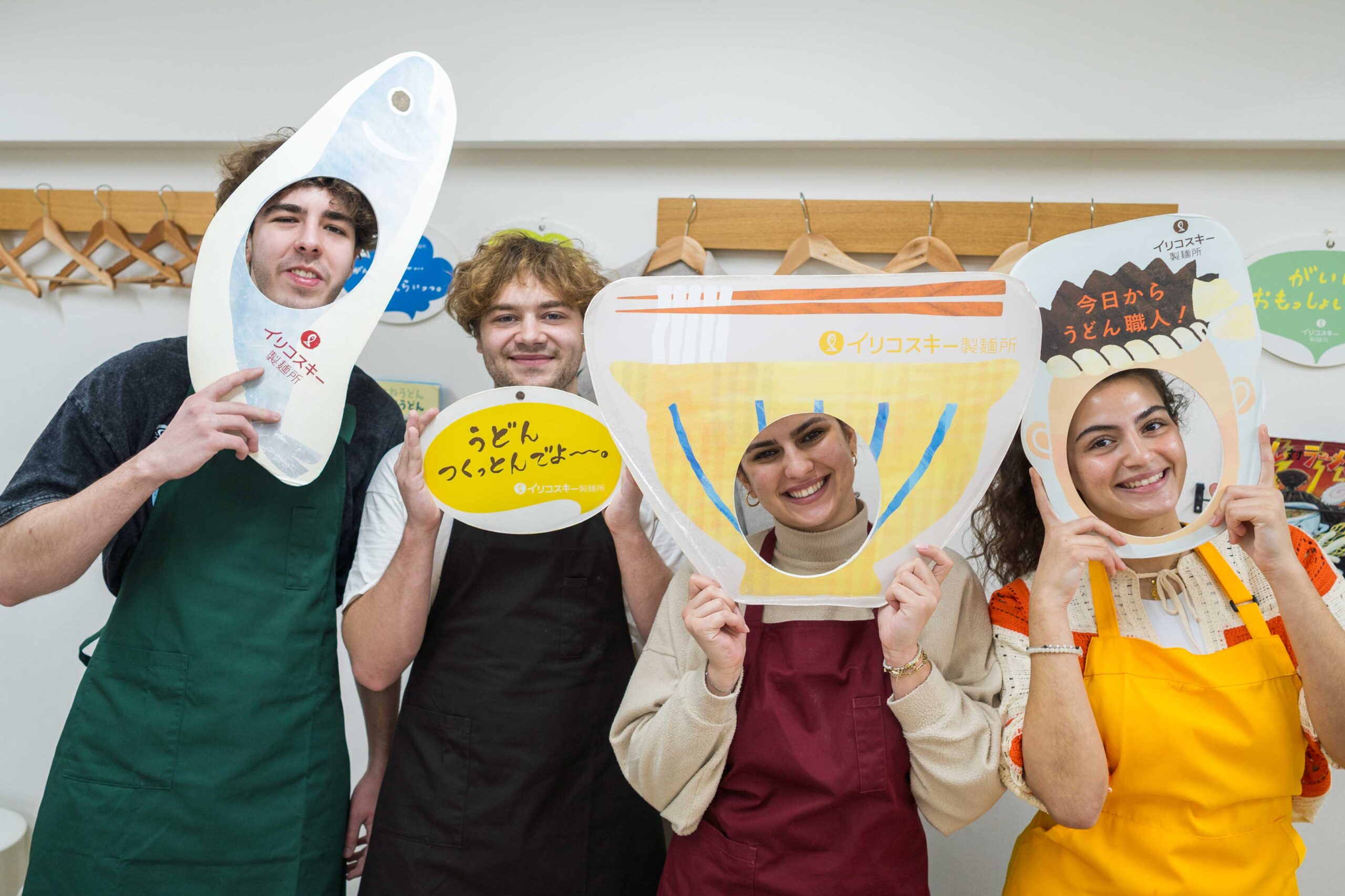
もう一組は、若い4人組のお客様。 大学に留学されている3名のみなさんと、もうお一方は「パレスチナから来た」とおっしゃるお客様でした。これまで多くの国の方をお迎えしてきましたが、パレスチナからとおっしゃる方は初めてです。 完成したうどんを持っての集合写真や、顔はめパネルを使っての記念撮影など、終始笑顔が絶えない賑やかなクラスとなりました。
ところで、海外からのお客様、特に若い方によく最初に「お前の名前は何だ?」と尋ねられることがあります。 クラスが始まれば名乗るのですが、彼らにとっては一番最初に名乗り合うのが礼儀なのかもしれませんね。 名前を伝えても、その後名前で呼ばれることはあまりないのですが、そんな文化の違いもまた、この教室の楽しいところです。
Today started with a happy reunion. Guests from Australia, who had previously visited as a couple, returned this time with their children and mother—three generations together! It brings us the greatest joy when guests decide to come back. From the mother and son working together to cut the dough, to everyone mixing flour and water to make the dough, the room was filled with warm family moments.
The other group was a party of four young people. Three of them were international university students, and the fourth guest mentioned they were from Palestine. We have welcomed people from many countries, but this was our first time hosting someone who said they were from Palestine. It was a lively class full of smiles, from the group photo with their finished udon to the fun shots with our comic foregrounds (kao-hame panels).
By the way, guests from overseas, especially younger ones, often ask me, “What’s your name?” right at the beginning. I usually intend to introduce myself once the class starts, but perhaps for them, introducing oneself first is the proper etiquette. Interestingly, even after I tell them my name, they rarely call me by it later, but these cultural differences are part of what makes this class so much fun.